
Oil Surges 11% as Hormuz Tensions Reshape the Energy Map
Strikepoint Staff
Investor-Focused Resource Sector Coverage
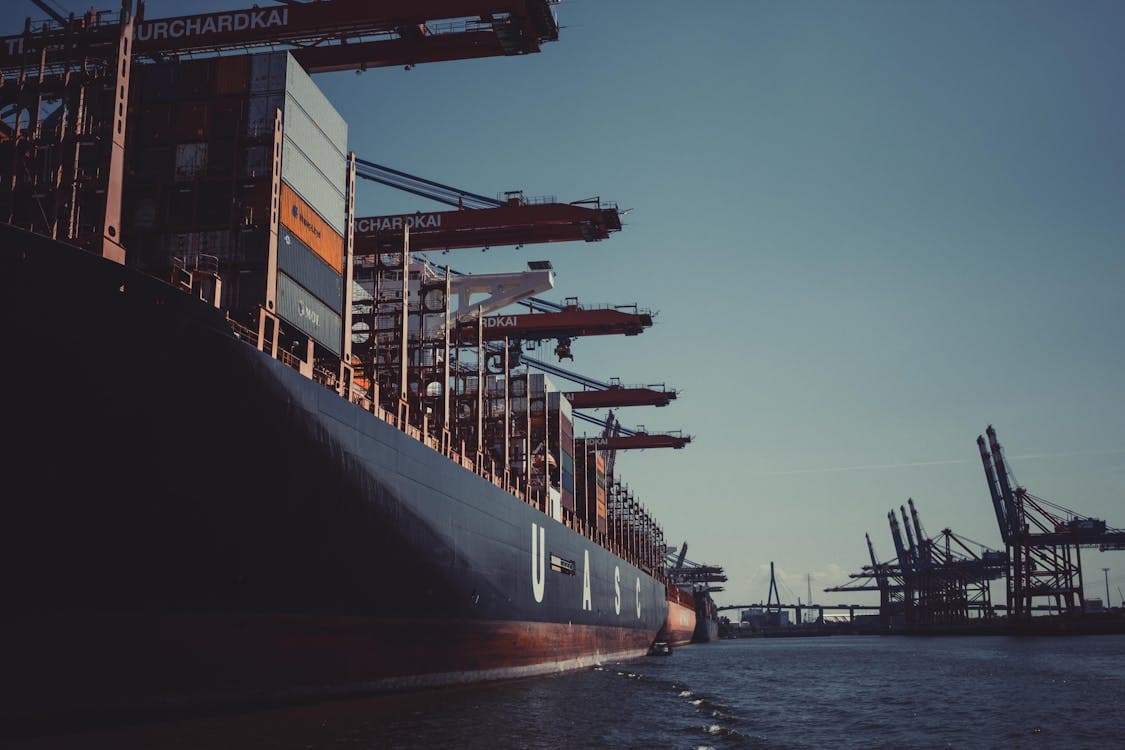
There's an old saying in the shipping industry: the Strait of Hormuz is less a waterway than a pressure valve. When it's open, nobody thinks about it. When it's closed — or even might close — the whole world remembers it exists. On April 4th, 2026, the whole world remembered.
West Texas Intermediate crude — the North American benchmark for oil pricing — jumped 11.15% in a single session, closing at $137.92 a barrel. That's not a typo, and it's not a monthly move. It happened in one day. To put that in context, an 11% single-session swing in crude is the kind of thing that shows up in commodity history books, usually with a war attached to the chapter heading. This time, the war in question is the escalating Iran conflict, and the specific geography everyone is suddenly fixated on is the Strait of Hormuz — the narrow chokepoint between Iran and Oman through which roughly 20% of the world's oil supply transits every single day.
Trump's comments that the U.S. could "take the oil" in a Hormuz push added political voltage to an already live wire. Whether that's a negotiating posture or operational foreshadowing doesn't matter much to oil traders in the short term. What matters is that the probability distribution of Hormuz disruption just shifted, and markets priced that shift immediately and violently.
But the Hormuz spike is just the headline. What's actually interesting is the three-part story playing out underneath it — one that connects a Middle Eastern chokepoint, a quiet scramble for Libyan crude, and a rare earths deal signed between Japan and France that most commodity desks have barely looked at. The thread running through all three is the same: the world is actively, urgently, and sometimes chaotically trying to reduce its dependence on single points of supply failure. Deglobalisation isn't a thesis anymore. It's a logistics problem being solved in real time.
Why Libya Is Having a Quiet Moment
Here's a detail that got buried under the Hormuz noise: oil majors are repositioning into Libya. Quietly, methodically, as sentiment there improves. This is not a coincidence in timing.
Libya has always been a strange case in the oil world — genuinely significant reserves, deeply unreliable output, political fragmentation that makes it hard to sign a contract and be confident anyone will honor it six months later. For years, that instability kept serious capital on the sidelines. But instability is relative. When your alternative barrels might get cut off at a strait that a U.S. president is talking about "taking," Libyan political risk starts to look more manageable by comparison.
What oil majors are doing in Libya right now is a form of supply chain insurance. They're not abandoning Middle Eastern exposure — they're hedging it. And that hedging behavior is itself a signal: sophisticated operators with long planning horizons are treating Hormuz disruption not as a tail risk but as a planning assumption. When the people who actually move physical oil barrels start repositioning capital, that tells you something the futures market can't fully capture.
It also matters for Libya itself. Capital flowing into Libyan production capacity changes the medium-term supply picture — not this quarter, but over the next few years. If even a fraction of that investment translates into stable output, it represents a meaningful addition to non-Hormuz supply routes. That's the second-order effect most people are missing while they're watching the WTI ticker.
The Gold Puzzle
Gold fell 2.77% on the same day oil spiked 11%. That's the kind of divergence that should make you stop and think, because the received wisdom — the thing every finance student is taught — is that gold is the crisis hedge. Geopolitical shock? Buy gold. War risk? Buy gold. So why did gold sell off on one of the most dramatic geopolitical commodity days in recent memory?
Morgan Stanley put out a note that frames it well: "Gold's liquidity works against it" in oil shocks. What this means in practice is that when a sudden move creates margin calls — the mechanism by which brokers demand additional collateral when positions move against a trader — institutions need to raise cash quickly. And they sell what they can sell, not what they want to sell. Gold is one of the most liquid assets on the planet. You can sell $500 million of gold before breakfast without meaningfully disrupting the market. You cannot do the same with, say, a position in a mid-cap copper miner.
So gold gets sold not because it's the right thing to do strategically, but because it's the easiest thing to do operationally. It's the spare tire you sell to pay the mechanic because it was in the trunk and easy to reach. This dynamic is well-documented historically — it showed up in March 2020 when COVID hit, and in the 2008 financial crisis — but it still surprises people every time it happens because the intuitive narrative (crisis = buy gold) is so deeply embedded.
The more nuanced read is that gold's pullback is probably temporary and technically driven. Silver, platinum (+1.32%), and palladium (+1.98%) all moved positively on the day, suggesting precious metals broadly aren't in trouble. Copper's 1.65% decline reflects genuine demand-destruction fears — if an oil shock slows industrial activity, you need less copper — which is a different and more fundamental signal. Natural gas was essentially flat (-0.61%), which is interesting given the Iran context and the known sensitivity of Australian LNG to that conflict. More on that in a moment.
The Japan-France Deal Nobody Is Talking About Enough
On the same day markets were consumed by the oil spike, Japan and France quietly signed a rare earths cooperation deal aimed at reducing dependence on China. This did not get the attention it deserves.
Rare earths are the category of 17 elements — neodymium, dysprosium, and others with names that sound like they were invented for a science fiction novel — that are essential for electric motors, wind turbines, defense electronics, and a growing list of clean energy technologies. China controls an estimated 60% of global rare earth mining and roughly 85% of processing capacity. That's not a supply chain risk. That's a supply chain vulnerability.
The Japan-France deal is small in isolation. But it's part of a pattern that, when you step back and look at it alongside the Libya repositioning and the Hormuz anxiety, starts to look like a structural rewiring of how the world thinks about critical resource supply. The common denominator is single-point-of-failure risk. Hormuz is a single chokepoint. China is a single processor. These risks have always existed — what's changed is the political appetite to actually do something about them.
For resource companies specifically, this is a genuinely significant shift. Rare earth projects outside China that were economically marginal at previous pricing — because they couldn't compete with Chinese production costs — become strategically valuable when governments are willing to pay a premium for supply security. We're already seeing this logic applied to lithium, nickel, and cobalt through various Western government offtake agreements and subsidies. The Japan-France deal suggests it's expanding to rare earths proper. Demand for copper, nickel, rare earths, and lithium is forecast to quadruple by 2040. That number gets more credible, not less, every time a deal like this gets signed.
The Australian LNG Paradox
Australia sits in a genuinely strange position in the Iran conflict. Its liquefied natural gas exports — LNG is natural gas that's been supercooled to liquid form for shipping — benefit from any Middle Eastern supply disruption, because buyers in Japan and South Korea immediately look for alternatives. Higher oil prices also support LNG contract pricing through indexation mechanisms built into many long-term supply agreements.
But the same conflict that boosts Australian LNG revenues also threatens the shipping lanes that Australian exporters depend on, raises fuel costs across the supply chain, and creates the kind of macroeconomic uncertainty that can suppress industrial demand for energy in key Asian markets. It's simultaneously a tailwind and a headwind, and which effect dominates depends on the severity and duration of the conflict — things nobody can price with confidence right now.
The fact that natural gas was flat on the day (-0.61%), despite the enormous oil move, suggests the market hasn't fully resolved this paradox yet. It might also reflect that LNG markets operate on longer contract cycles and don't reprice intraday the way crude does. The real LNG story from this crisis will play out over weeks and months, not hours.
Fujairah and What the Stockpile Numbers Actually Tell You
Fujairah is a port emirate on the eastern coast of the UAE — crucially, on the Gulf of Oman side, meaning it's accessible without transiting the Strait of Hormuz. It serves as a critical oil storage and bunkering hub (bunkering means refueling ships), and its stockpile levels are closely watched as a real-time indicator of regional supply stress.
Those stockpiles just hit a six-month low. That's not a headline number most people track, but it matters because it tells you something about actual physical supply conditions rather than just sentiment. When Fujairah inventories draw down, it means physical buyers are pulling more barrels out of storage than are being replenished. That's a real-economy signal sitting underneath all the geopolitical noise, and it was already in motion before the April 4th spike. The market move didn't create the tightness — it priced what was already there.
The Bigger Map
Equity markets, interestingly, barely moved. The Dow was down 0.13%, the S&P essentially flat at +0.11%, the Nasdaq up 0.18%. That's a remarkable non-reaction to an 11% oil move, and it probably reflects two things: first, that equity markets have partly priced in elevated geopolitical risk over recent months, and second, that there's genuine uncertainty about whether this is a transient spike or a structural shift in the oil price regime.
That uncertainty is rational. Single-session moves of this magnitude sometimes stick — 1973 is the reference point everyone uses — and sometimes give back most of their gains within weeks as the specific trigger either resolves or gets absorbed. What tends not to reverse is the underlying repositioning behavior: the Libya plays, the rare earth deals, the Fujairah supply chain rerouting. Those are structural responses to structural vulnerabilities, and they don't unwind just because a diplomatic phone call happens to go well on a Tuesday.
The Cuba footnote — 2,000 prisoners being released amid the oil supply crunch, suggesting Havana is managing domestic pressure through political gestures while its own energy situation deteriorates — is a reminder that oil shocks don't stay contained to commodity markets. They ripple through political economies in ways that are hard to model and impossible to predict. That's not a tradeable insight. It's just a reminder that the energy map doesn't have clean borders.
Nobody thinks about the pressure valve until the pressure builds. Right now, it's building across enough simultaneous fault lines — Hormuz, China's rare earth grip, Middle Eastern storage draws, LNG route uncertainty — that the interesting question isn't whether oil stays at $137. It's whether the map being redrawn in response to this moment holds its new shape when the crisis eventually cools. History suggests it usually does.